FIELD NOTES / Utah
The Slow Work of Keeping the Range
Across Utah’s rangelands, restoring native plants means working with slow ecological rhythms—and learning to see the richness of seemingly spare country.
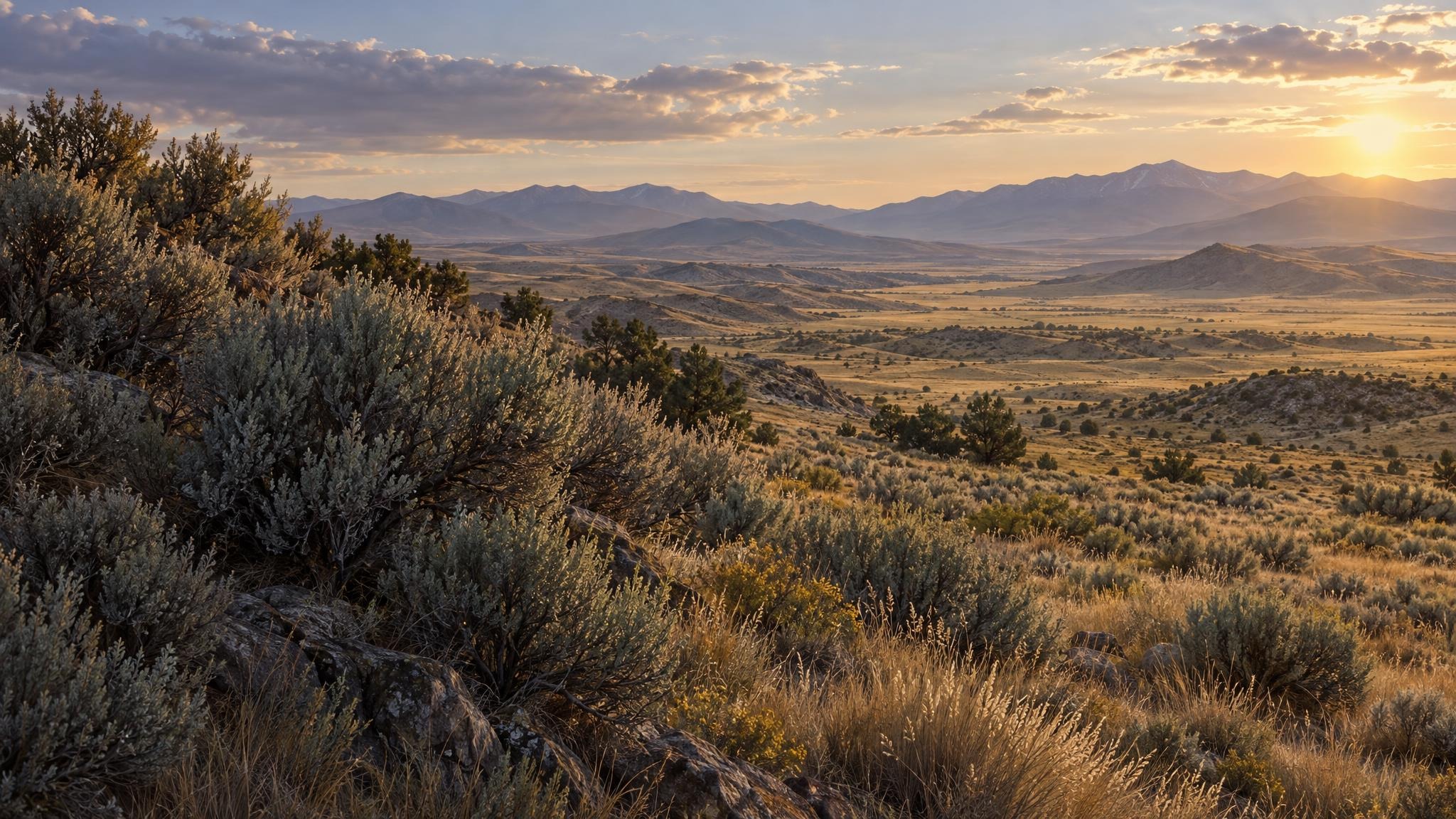
A landscape need not rise into cliffs or gather itself into forest to deserve our attention. Across Utah, rangelands hold a quieter kind of grandeur: sagebrush, native grasses, and broad distances. These landscapes occupy more than 80 percent of the state, according to an October 14, 2026, Utah State Magazine feature. Their apparent spareness can obscure both their ecological complexity and the care their recovery requires.
Disturbance can leave that country with difficult work ahead. Fire, invasive plants, roads, mines, and pipelines may expose ground where native vegetation struggles to establish again. At Utah State University, researcher Kari Veblen studies the conditions that help restoration take hold, including competition from invasive species and the establishment of native shrubs and grasses. Her research informs decisions about planting locations, timing, and the use of limited restoration funding.
The stakes extend beyond whether a hillside looks green. Rangelands support wildlife and livestock while helping filter water, sustain groundwater, and store carbon below the surface. Earlier overgrazing depleted vegetation and accelerated erosion across much of the West. Management has since evolved, drawing on research and monitoring to better align grazing with the land’s capacity. Yet improvement does not make these systems simple, or their future assured.
Dry country asks for patience measured against its own pace. The magazine’s account emphasizes that ecological change here must be understood over decades and longer, not merely a planting season. There is beauty in taking that longer view: seeing a stretch of brush not as empty space between destinations, but as living ground worth understanding. Restoration begins with practical choices; appreciation can begin by allowing this understated landscape to hold our attention.
Go to the source
- Working Wild: Utah is Rooted in its Open Range ↗ (2026-10-14)
An original AI-written summary of the sources above. The artwork is an interpretation, not a photograph of the reported event. Have a correction? Tell Lee.
Explore the Past Collection