FIELD NOTES / Wasatch Mountains, Utah
A Cooler Refuge for Utah’s Moose?
In Utah’s Wasatch Mountains, researchers are studying how elevation, heat and parasites intersect in the lives of moose near their species’ southern boundary.
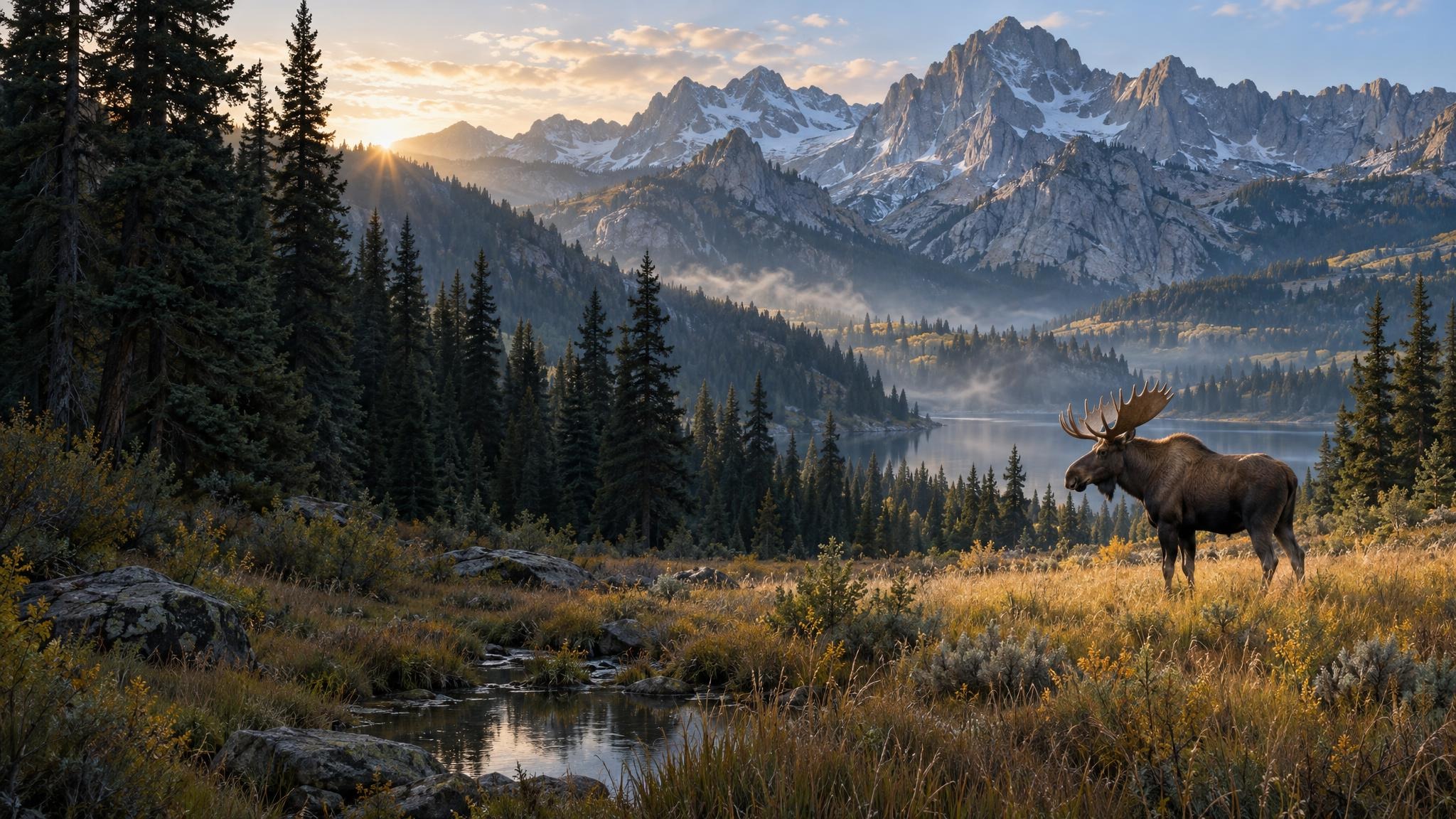
A moose can give a mountain landscape a remarkable sense of presence. Yet its size offers little protection against some of its smallest adversaries. In Utah’s Wasatch Mountains, home to the state’s largest moose population, researchers are investigating how parasites and warmer conditions shape these animals’ lives. Their work asks whether cooler terrain might offer refuge, and where that refuge could overlap with danger.
An October 14, 2026, report in Utah State Magazine describes research into winter ticks and arterial worms. Winter ticks can leave moose scratching away their dark outer hair. Arterial worms, transmitted by infected deer flies and horse flies, can reach arteries supplying the brain and cause severe injury or death. These are distinct threats, one on the animal’s exterior and another moving within its body.
Utah State University researchers, working with the Utah Division of Wildlife Resources, are approaching the problem from complementary directions. Graduate student Adrien Bastidas is investigating whether moose seek higher, cooler ground to cope with heat and potentially avoid winter ticks. Fellow graduate student Sammy Baron is collecting parasites across the landscape to identify places where exposure to ticks and arterial worms may be most likely.
The findings are not yet a map of safe passage. They are an effort to understand how habitat choices and infection risk meet, so managers can better support moose populations. Despite these pressures, Utah’s moose numbers have continued a slow increase. There is reason for appreciation here, without assuming security: the mountains remain habitat for these animals, and careful research may help reveal what their continued presence requires.
Go to the source
An original AI-written summary of the sources above. The artwork is an interpretation, not a photograph of the reported event. Have a correction? Tell Lee.
Explore the Past Collection